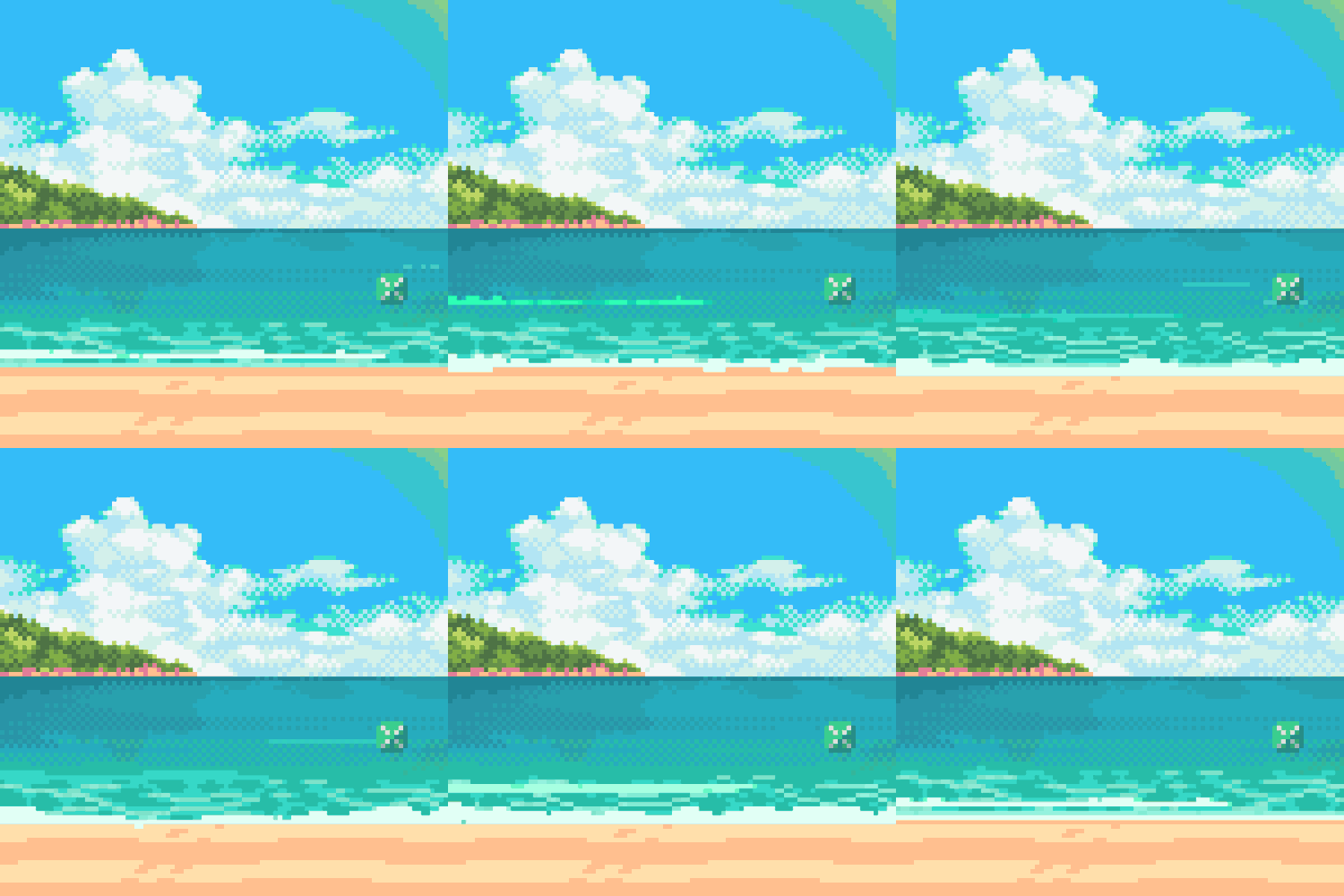
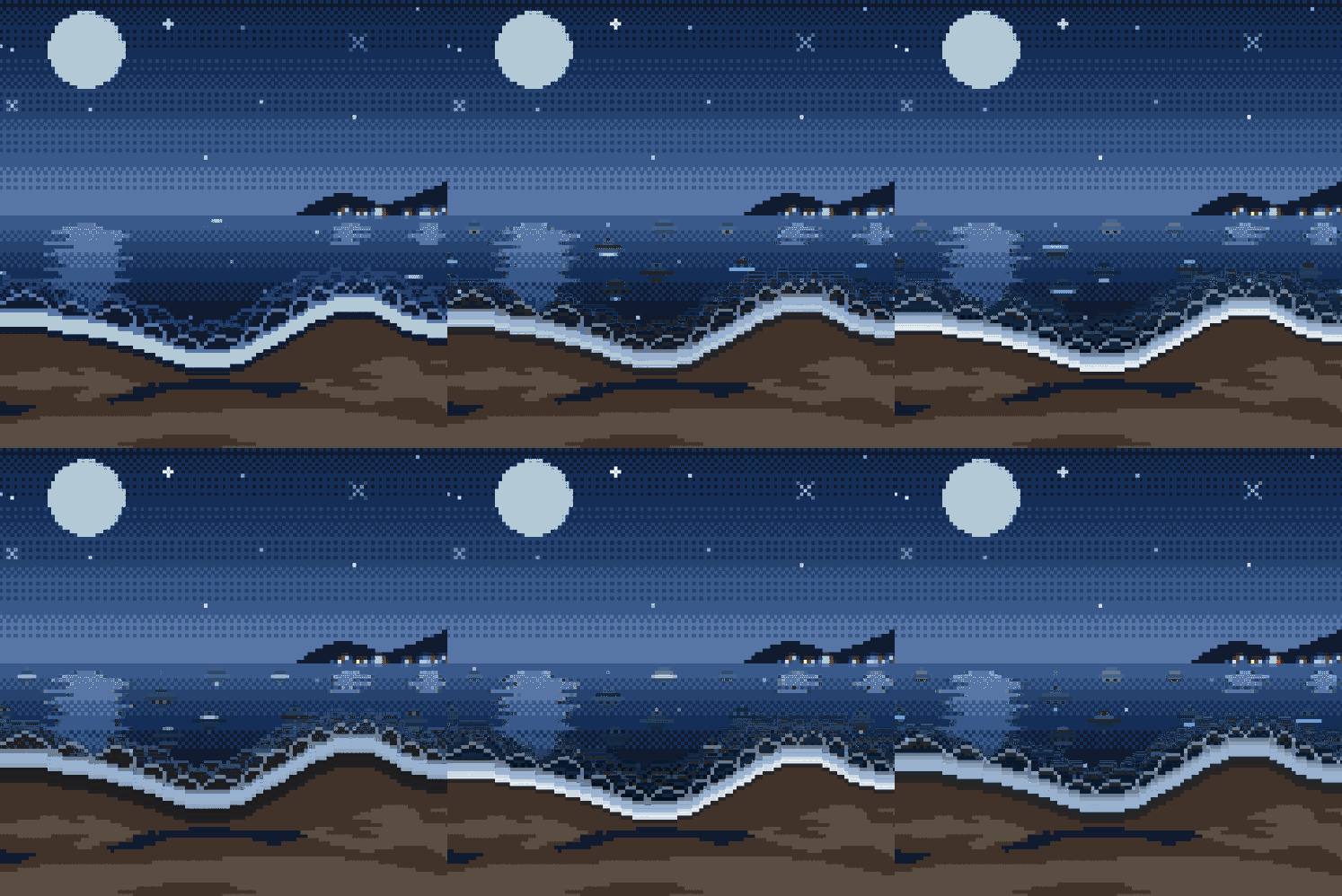
For me, the definition for this place to be “hidden” is for the possibility for strangers to stumble across this island to be as close to zero as possible.
You can think about this website like a small island out there in the infinite ocean of the internet. There is no navy to patrol the waters for invaders, in fact anyone can just come up to the shore and walk around and see everything on the island. But through the small changes I have made to this website, it’s (hopefully) not on any maps of the internet. The coordinates of the island is the URL to it, and that only exists through verbal transmission.
Note
I know that I called this site an “oasis”, which is located in a desert, and I’m using an “island in an ocean” metaphor, which is incongruent. I just find the mental model of this place being a nice tropical island more pleasant than being in the middle of the desert. Please bear with me here.
Here’s what I did to intentionally tuck this island away in obscurity:
Step 1: Turning away the mapmakers
This ocean is full of automated survey ships. There are no humans manning these ships, but rather autonomous robots that traverse the waters on their own. The biggest ships are for search engines like Google and Bing, but more recently there’s been an influx of a new kind of ships: ones for AI companies that want training data. The goal of these ships is to map out all of the islands on this sea and report them back.
The first thing that I put was some signs in the harbor that says “don’t chart this place”. As ships approach, they’re told to turn back. This is done by a little piece in the response body of this website:
X-Robots-Tag: noindex, nofollow
Next, I planted a flag on the beach of the island that says “ok, you’ve come onto this island, turn back and don’t chart it”. This is a little piece of HTML on every page that looks like this:
<meta name="robots" content="noindex, nofollow" />Big search engines like Google have a strong track record of respecting these signs. If they’re caught violating them, there’s major legal repercussions they could face. AI companies, not so sure, but they’re less of a threat for human discovery.
Step 2: Removing any broadcasts
Many sites openly broadcast information about their websites. The first one is a sitemap, which is a detailed map of every page on the website. The other one is an RSS feed, which is like transmitting radio waves from the island every time an update happens on it. These have been disabled in the settings for my website:
options:
  enableSiteMap: false
  enableRSS: false
Another piece is if a visitor of the island sets sail to another place (clicking a link on this site that goes to another website), they normally carry papers of where they came from, and the destination port often records those papers. By attaching another snippet of HTML to every page, we give instructions to not carry those papers when traveling:
<meta name="referrer" content="no-referrer" />Step 3: Not relying on the mainland for provisions
The last part is making this island fully self sufficient for everything by not having to import anything from the outside.
The default codebase for this island used an analytics platform, Plausible, to record how many people came to this island. This requires sending information out of the island to that service, leaking the coordinates. To prevent this, I turned off sending anything to Plausible by changing this in the settings:
analytics: plausible
# stop reporting data externally
analytics: null
The last piece is the fonts of this website: EB Garamond and IBM Plex Mono. By default the website used Google Fonts to supply these fonts. If this was still on, when you load a page, your browser would reach out to Google saying “Hello, we’re from this island, https://hiddenoasis.vip, and we need your EB Garamond and IBM Plex Mono fonts, can you please provide it?”. Google would respond “Here you go! But let me record your island, https://hiddenoasis.vip, for our business purposes”. To prevent this transaction, the fonts were moved to a stash on this island, so when you load a page, it’s locally sourced and Google isn’t contacted.
fontOrigin: local
cdnCaching: false
J, this all sounds a bit paranoid?
Honestly, if I didn’t have any of these precautions in place, it’s very likely that this island would still live in complete obscurity with no other humans ever coming across it. This island is but a tiny blip in the vast swaths of islands that are cataloged every day. There’s a whole industry focused on making a website appear as high up as possible on a search result, and this place does absolutely nothing to attempt to compete with that.
But there is some aspect of psychological security, knowing that I have done what I can to this island to protect it from discovery—that ultimately allows me to be more authentic here.